

Accounting firms live in a crowded market. Your technical skills alone won't set you apart from competitors who offer the same services.
Brand storytelling changes that. When you share your firm's origin, values, and real client wins, prospects see the person behind the business-not just another accountant.
At Cajabra, LLC, we've seen firms that master this approach attract better clients and build stronger relationships. This guide shows you how.
Over 46,000 accounting firms compete in the United States for the same clients. Your tax knowledge, audit expertise, and compliance skills are table stakes-they don't win business anymore. Prospects expect you to be competent. What they don't expect is to understand why you do what you do and how you're different from the firm down the street.
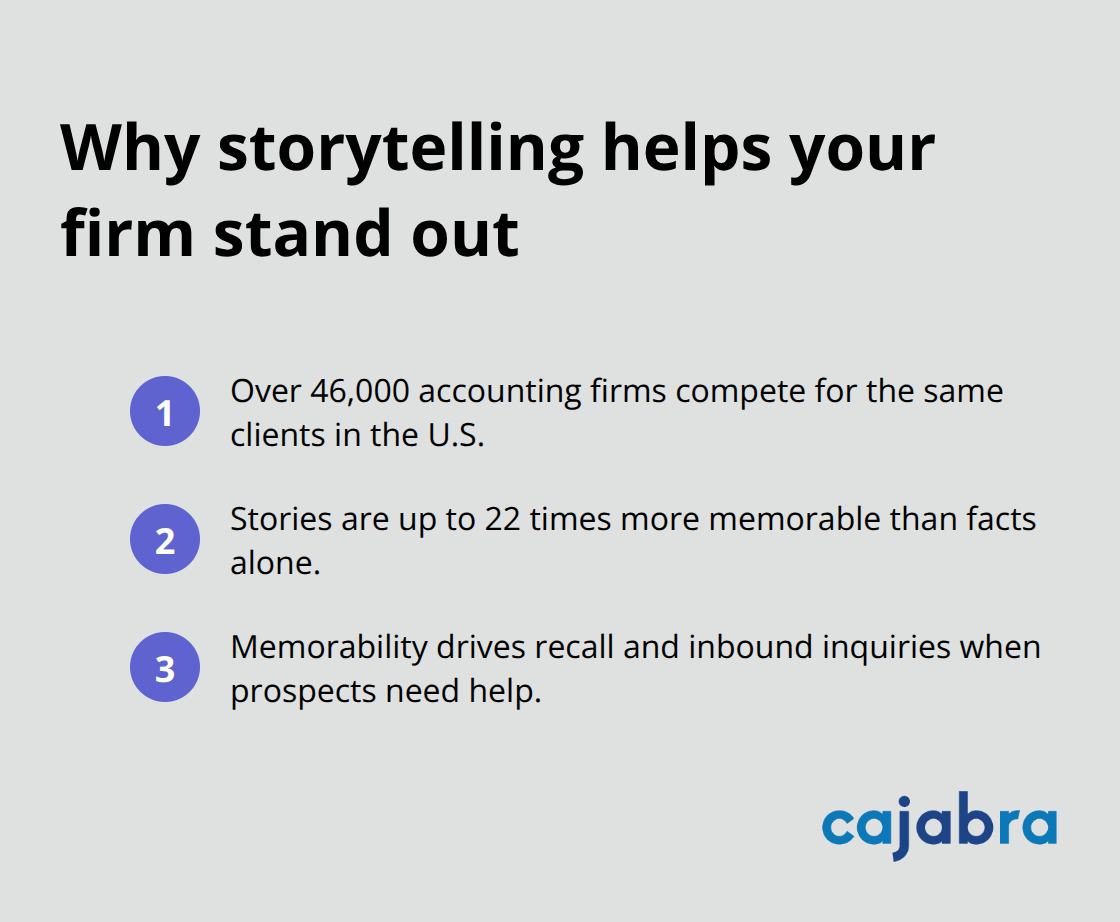
This is where storytelling gives you an unfair advantage. Research shows that stories are up to 22 times more memorable than facts alone. When a prospect remembers your firm's origin and values weeks after meeting you, they're far more likely to call when they need accounting help. That memory gap between you and your competitors is everything.
Two accounting firms offer the same tax planning and bookkeeping services. One tells prospects about their 15 years of experience and their commitment to accuracy. The other tells the story of how the founder started the firm to help family-owned businesses navigate tax complexity after watching her parents lose thousands to poor planning. Which firm do you think gets the call? The second firm isn't more qualified-they're more memorable. Your competitors can copy your service offerings. They can't copy your origin story, your values, or the specific way you solve problems. When you articulate what makes your approach different, prospects stop comparing you on price and start evaluating you on fit. This is the moment you move from commodity to trusted advisor.
Prospects don't believe generic claims about your firm's value. They believe concrete outcomes. If you've helped five small business owners reduce their tax liability by an average of $12,000 annually, that's proof. If you've cut a client's bookkeeping time from 40 hours monthly to 10 hours through process automation, that's proof. If you've caught errors in a prospect's prior-year returns that saved them from an audit, that's proof. Your story isn't complete without these numbers attached to real client situations. When you share specific results alongside the client's industry and business size, skeptical prospects recognize themselves in that story. Many business owners are drowning in tax complexity and searching for guidance. Your story about how you've solved similar problems for clients in their industry becomes the reason they choose you over a larger, impersonal firm.
The firms that win market share don't just have great stories-they share them everywhere prospects look. Your website, social media, email, and sales conversations all need to reflect the same narrative about who you are and what you stand for. The next section shows you exactly where to place your story and how to adapt it for each channel so prospects encounter your message consistently, no matter how they find you.

Your firm's story starts with why it exists. Not the generic mission statement on your website-the real reason you built this business. Did you start because you watched clients get crushed by preventable tax mistakes? Did you leave a larger firm because you wanted to serve business owners instead of chasing billable hours? Did you build a practice around a specific expertise like construction accounting or nonprofit compliance? This origin matters because it separates you from firms that exist solely to extract fees.
The strongest accounting firm stories don't hide the founder's frustration or the problem that sparked the business. A founder who spent five years watching family-owned manufacturers lose money to poor cash flow management, then built a firm specifically to solve that problem-that's a story prospects remember. Specificity is non-negotiable here. Avoid vague statements about wanting to help clients or provide excellent service. Instead, name the exact problem you saw repeatedly, the client type you wanted to serve, and the outcome you committed to delivering. When you articulate this clearly in conversations and on your website, prospects with that exact problem recognize themselves immediately.
Your approach and values are what separate you from the accountant in the next office. Maybe your firm refuses to take clients you can't genuinely help, even if it costs revenue. Maybe you've built a practice around proactive tax planning instead of reactive compliance. Maybe you use specific tools or methodologies that deliver faster results than competitors. Maybe your team spends hours each month on strategy calls rather than just filing returns.
These operational choices reveal your real values-not the poster version, but the decisions you actually make when profit is on the line. Prospects care about this because it predicts how you'll treat them. If you've turned away profitable clients because they weren't a good fit, that signals you'll push back on bad decisions affecting their business. If you've invested in automation and training to reduce client workload, that shows you value their time.
Real client outcomes cement your story into proof. A tax reduction of $8,500 for a specific manufacturing client, achieved through a depreciation strategy you implemented-that's concrete. A bookkeeper who went from 35 hours weekly on manual data entry to 12 hours after you redesigned their process-that's measurable.
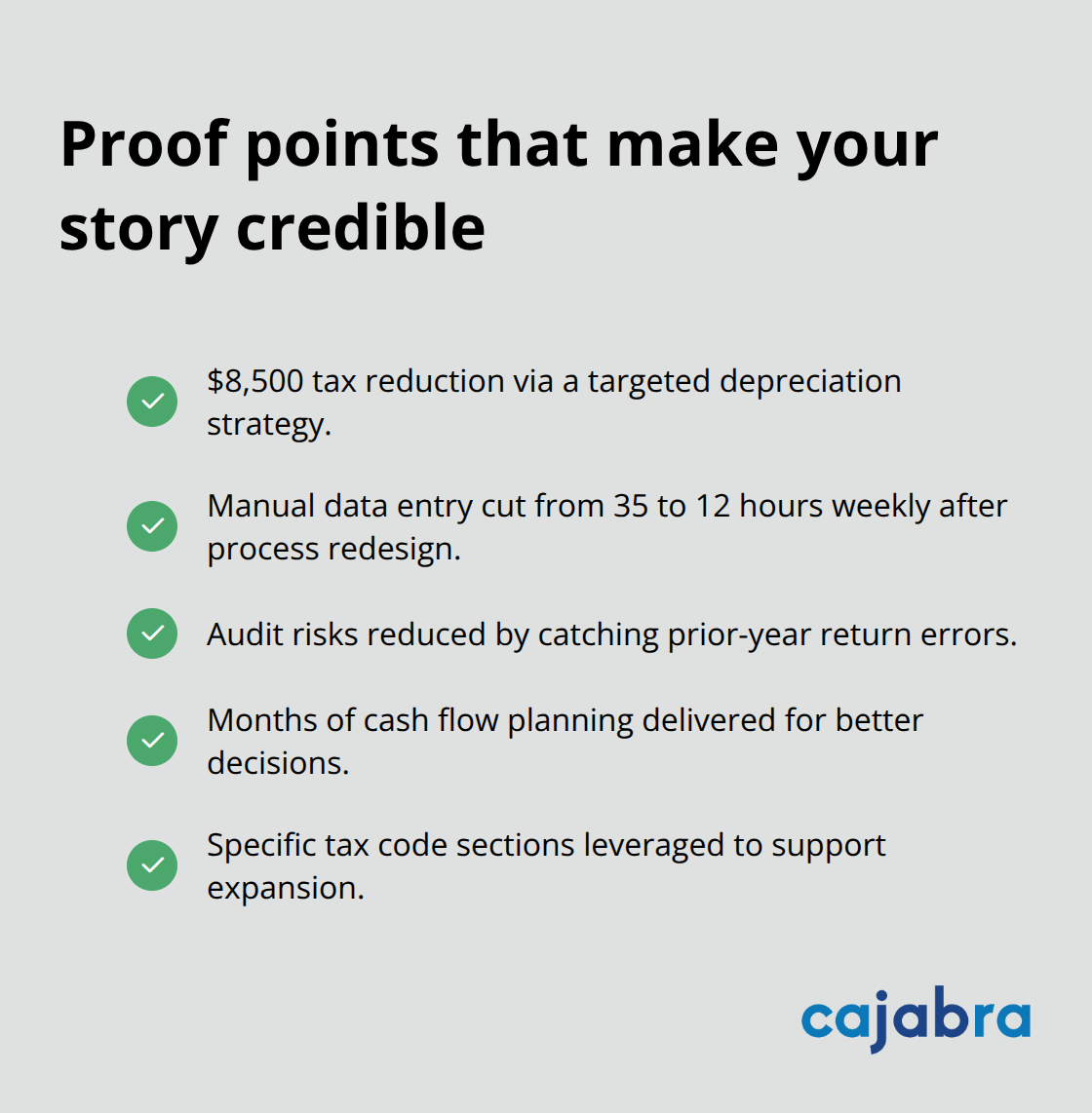
The number of audit flags you've prevented by catching errors in prior returns, the months of cash flow planning you've done for clients, the specific tax code sections you've leveraged for a client's expansion-these are the details that transform your narrative from interesting to credible.
When you share outcomes, always include the client's industry and approximate size so prospects in similar situations see themselves in your results. Concrete client outcomes and measurable results make your story stick in a prospect's mind far longer than generic claims about your expertise. The prospect thinks, "That's exactly my situation," and suddenly your firm becomes the obvious choice.
Now that you've identified your origin, clarified your values, and collected your strongest client outcomes, you're ready to share your expertise across the channels where prospects actually find you.
Your website is where prospects evaluate whether your firm deserves their attention. If your homepage talks about tax preparation and bookkeeping services without mentioning your origin or approach, prospects see a commodity. Instead, your homepage should open with the problem you solve and the specific type of client you serve best. A manufacturing accounting firm might lead with: We help manufacturers cut tax liability through depreciation strategies most firms miss. A construction firm might say: We've prevented $2.3 million in audit exposure for construction companies over the past five years. This front-and-center positioning works because prospects immediately recognize whether your firm solves their actual problem.
Your landing pages should go deeper. If you're targeting family-owned businesses, create a dedicated page that tells the story of how you help owners transition to the next generation without destroying the business through poor tax planning. Include a specific outcome: helped 12 family business owners structure succession plans that saved an average of $340,000 in estate taxes. Prospects who land on this page see themselves in that narrative.
Your email strategy matters equally. When you capture a prospect's email through a lead magnet like a tax checklist or cash flow template, your follow-up sequence should tell your story across four to five automated messages. The first message delivers the lead magnet. The second message shares your origin and why you built this firm. The third message showcases a specific client result in their industry. The fourth message addresses a common objection or misconception about accounting services. The fifth message invites a conversation. This sequencing moves prospects from awareness to trust without requiring your personal involvement until they're genuinely interested.
Social media and video content amplify your story where prospects spend time daily. LinkedIn is where business owners and CFOs consume content, so post insights about tax law changes affecting their industry, then tie those insights back to how your firm approaches planning differently. If you've helped a construction client save $18,000 through a cost segregation analysis, create a short video explaining the concept and the outcome. Video content converts prospects at higher rates than text because they see your face and hear your voice, which builds familiarity fast. Post this video on your website, YouTube, and LinkedIn.
During sales conversations, your story should flow naturally based on what the prospect tells you about their business. If a prospect mentions they're drowning in bookkeeping, you share the story of how you automated a similar client's process and cut their monthly workload from 35 hours to 12. If they mention tax stress, you tell the story of your origin and why you built your firm around proactive planning instead of reactive compliance. The key is listening first, then matching your story to their specific pain point. This approach positions you as someone who understands their situation, not someone pitching a service.
Your accounting firm's story represents the most underutilized asset in your marketing arsenal. While competitors list services and credentials, you build genuine connections with prospects by showing them who you are, why you started this firm, and what real results look like. Brand storytelling transforms how prospects perceive you-from interchangeable service provider to trusted advisor worth retaining.
The firms winning market share right now aren't the largest or the cheapest. They're the ones whose origin, values, and client outcomes stick in a prospect's mind long after the first conversation ends. When a business owner recalls your story weeks later, they call you first when they need help. That consistency across your website, email, social media, and sales conversations compounds over time into a reputation that attracts better clients and commands higher fees.
Implementing this approach requires intentional effort to articulate your real origin, clarify what you actually value, collect your strongest client outcomes, and weave these elements into every marketing channel. The payoff proves substantial-prospects who recognize themselves in your narrative, higher close rates because you compete on fit rather than price, and a pipeline of retainer clients who stay longer because they chose you for who you are. Cajabra helps accounting firms systematize their brand storytelling and build marketing engines that fill pipelines consistently.