

Accounting firms that ignore social media are missing out on a direct line to potential clients. Social media marketing for accounting firms isn't optional anymore-it's how businesses find trusted advisors.
At Cajabra, LLC, we've seen firsthand how the right social media strategy transforms client acquisition and builds lasting credibility. This guide shows you exactly how to make it work for your firm.
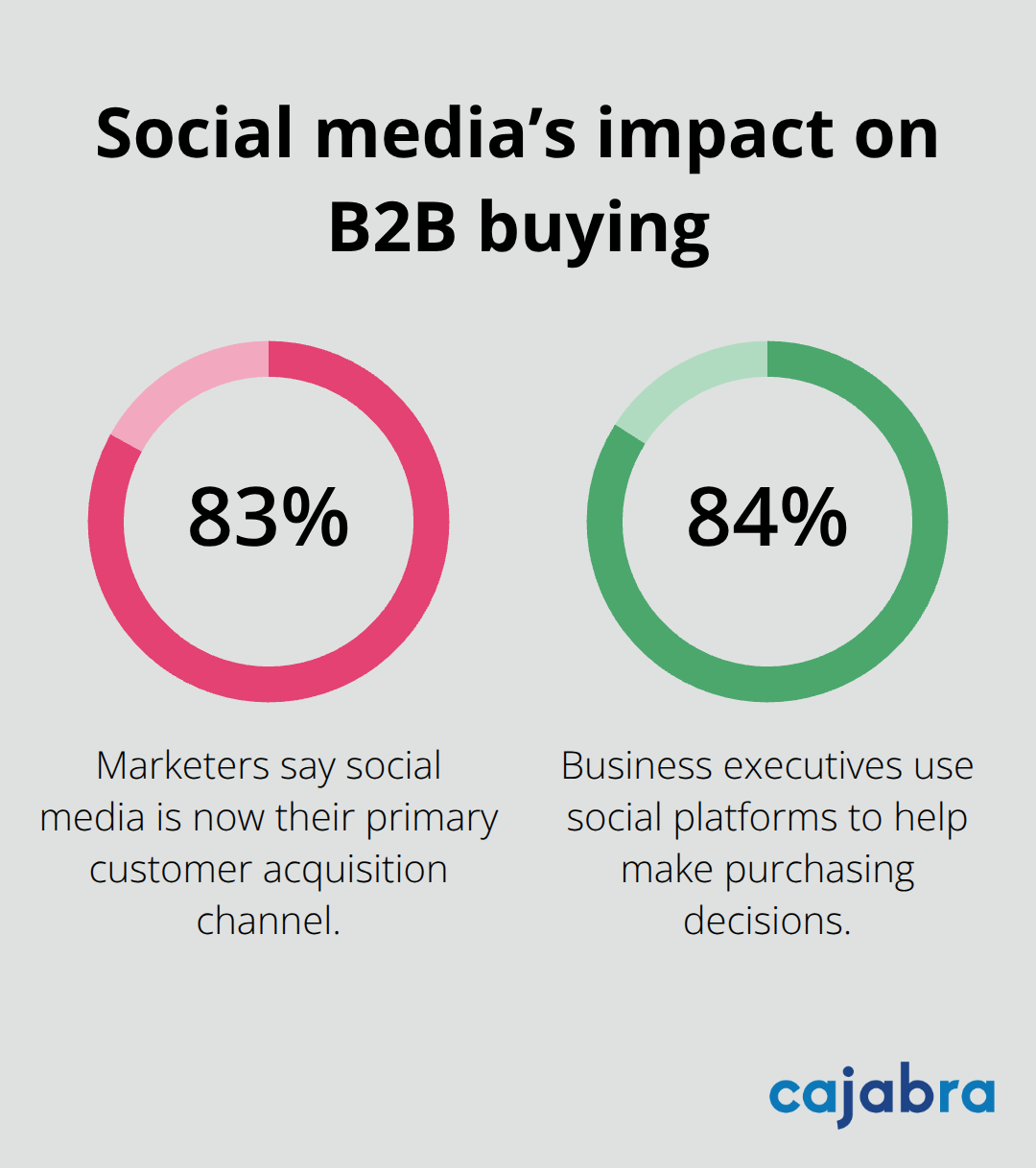
Social media isn't just about posting tax tips and hoping someone clicks. 83% of marketers say that social media has become their primary customer acquisition channel, and 84% of business executives use social platforms to help make purchasing decisions. For accounting firms, this means your potential clients actively research firms on LinkedIn, Facebook, and other platforms before they ever contact you. If you're not visible there, a competitor is.
The firms that dominate their markets aren't the ones with the most followers-they're the ones who show up consistently with relevant content that speaks directly to business owners and financial decision makers.
When a prospect searches for an accountant, they don't just look at Google reviews anymore. They visit your social profiles to understand your firm's personality, expertise, and whether they actually want to work with you. A weak or inactive social presence signals that you're either too busy or outdated. According to research from IDC, 84% of business executives use social media to make purchasing decisions, which means your social profile does the heavy lifting before your first conversation ever happens. The firms winning new clients position themselves as knowledgeable advisors, not transaction processors. LinkedIn is where this happens for accounting firms. That's not a vanity metric; that's a revenue channel you can't ignore.
Email marketing delivers approximately $36 in value for every $1 spent, but you need leads to email in the first place. Social media feeds those leads directly into your funnel. When you post consistent, valuable content (tax deadline reminders, common client mistakes, industry updates), you capture attention from people actively thinking about accounting needs. The mistake most firms make is spreading themselves too thin across every platform. Focus on one or two channels where your target clients actually spend time. For most accounting firms, that's LinkedIn for reaching business owners and decision makers, combined with Facebook for broader reach and engagement. Posting once a month won't cut it. You need a realistic cadence-LinkedIn performs better with thoughtful, less frequent posts, while Facebook can handle 1-3 posts per week. The key is choosing a frequency you can actually maintain without burning out your team.
Your competitors are already on social media. Some post sporadically and wonder why nothing happens. Others maintain a consistent presence and watch leads arrive month after month. The difference isn't talent or luck-it's strategy. You need to decide which platforms align with where your ideal clients spend their time, then commit to a realistic posting schedule. LinkedIn demands thoughtful, long-form content that establishes your expertise. Facebook rewards a mix of educational posts, firm updates, and client stories. The firms that win understand that social media is a lead generation channel, not a vanity project. Your next move is selecting the right platforms and building a content strategy that actually converts prospects into clients.
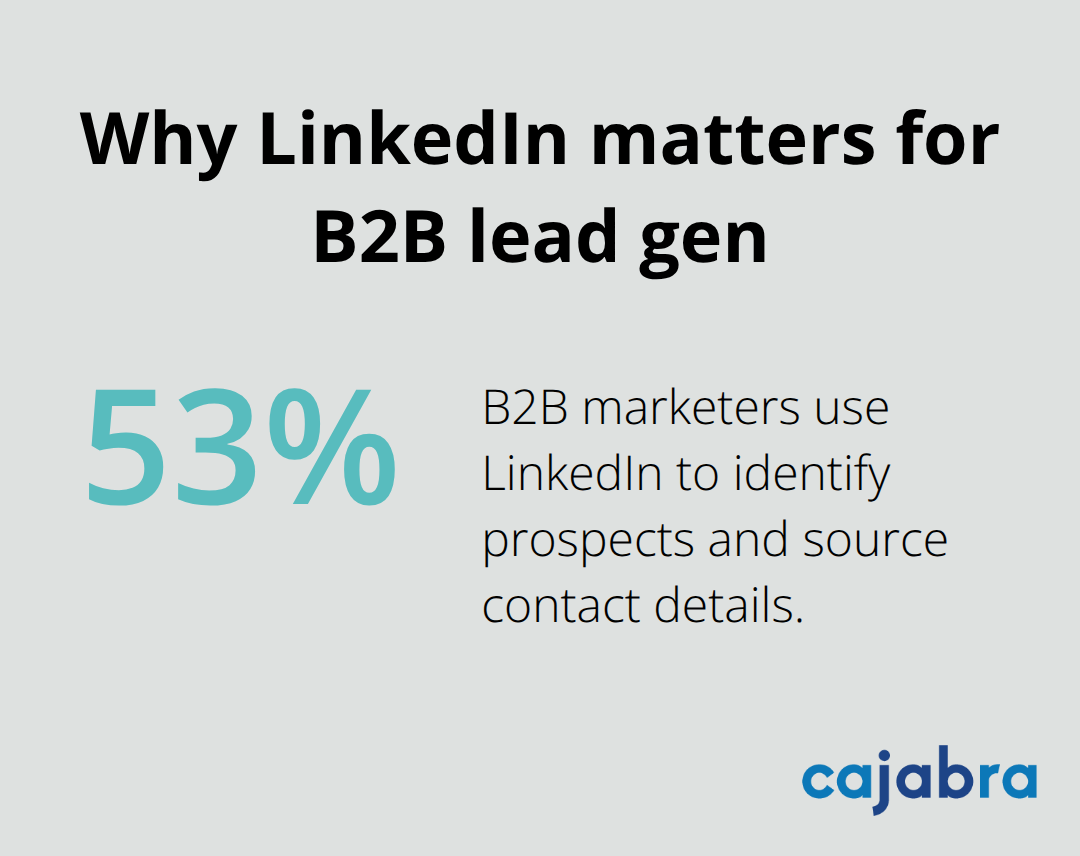
LinkedIn and Facebook serve different purposes, and treating them as interchangeable wastes your resources. LinkedIn reaches business owners and financial decision makers who actively consume professional content. According to Foundation Inc, 53% of B2B marketers use LinkedIn to identify prospects and source contact details, which means your target clients evaluate firms there. Facebook, with 2.89 billion monthly active users, offers broader reach but demands different content. Most accounting firms should start with LinkedIn because your ideal clients (business owners, CFOs, controllers) spend significant time there. Post thoughtfully once or twice per week with insights on tax law changes, common client mistakes, or industry trends. Avoid posting daily just to stay visible-LinkedIn users expect depth, not frequency.
Only add Facebook if you have capacity to maintain 1-3 posts weekly with educational content, firm updates, and client success stories. The Association for Accounting Marketing reports that high-growth firms spend about 2.1% of revenue on marketing, while average firms spend 1%. That investment goes further when you focus on two platforms executed exceptionally rather than scatter resources across five platforms executed poorly.
Content that converts leads talks about client problems, not your credentials. Business owners searching for accountants want to know if you understand their specific challenges. A post about tax deadline extensions matters more to a small business owner than a post celebrating your firm's anniversary. Create content addressing the pain points your ideal clients actually face: managing cash flow, navigating tax compliance changes, preparing for audits, or reducing their tax burden. Share concrete examples from your experience without naming clients. If you work with contractors, post about quarterly estimated taxes and common deductions contractors miss. If you serve nonprofits, address grant accounting or Form 990 compliance issues. This positions you as someone who understands their world and speaks their language.
Paid advertising on LinkedIn and Facebook amplifies your content to reach decision makers outside your existing network. LinkedIn ads cost between $2 and $15 per click depending on your industry and targeting, while Facebook ads typically run $0.50 to $5 per click. Start with a modest budget of $300 to $500 monthly on LinkedIn targeting business owners and finance professionals in your geographic area. Direct them to a landing page offering something valuable like a Year-End Tax Checklist or a 15-minute consultation. Track which ads generate actual leads through your CRM, then scale what works. Most accounting firms see their first qualified leads within 30 days of consistent paid advertising paired with strong organic content.
The next step involves measuring what actually works and adjusting your approach based on real performance data rather than assumptions about what your audience wants.
Most accounting firms post sporadically, ignore messages from prospects, and have no idea whether their social efforts generate actual revenue. These aren't minor oversights-they're the exact reasons why firms abandon social media after three months and declare it doesn't work. The reality is that social media requires discipline, not just good intentions. An accounting firm posting once every two weeks signals that either the firm is disorganized or too busy to engage with potential clients. Prospects notice this immediately.
When someone comments on your post or sends a direct message asking about your services, a delayed response or silence kills the deal before it starts. Firms that respond to inquiries within 24 hours see significantly higher conversion rates than those that take days or weeks to reply. The difference between a firm that converts social leads and one that doesn't often comes down to three operational failures: inconsistent posting that keeps your firm invisible, neglecting direct messages and comments that indicate genuine interest, and never measuring whether your efforts actually produce leads or revenue.
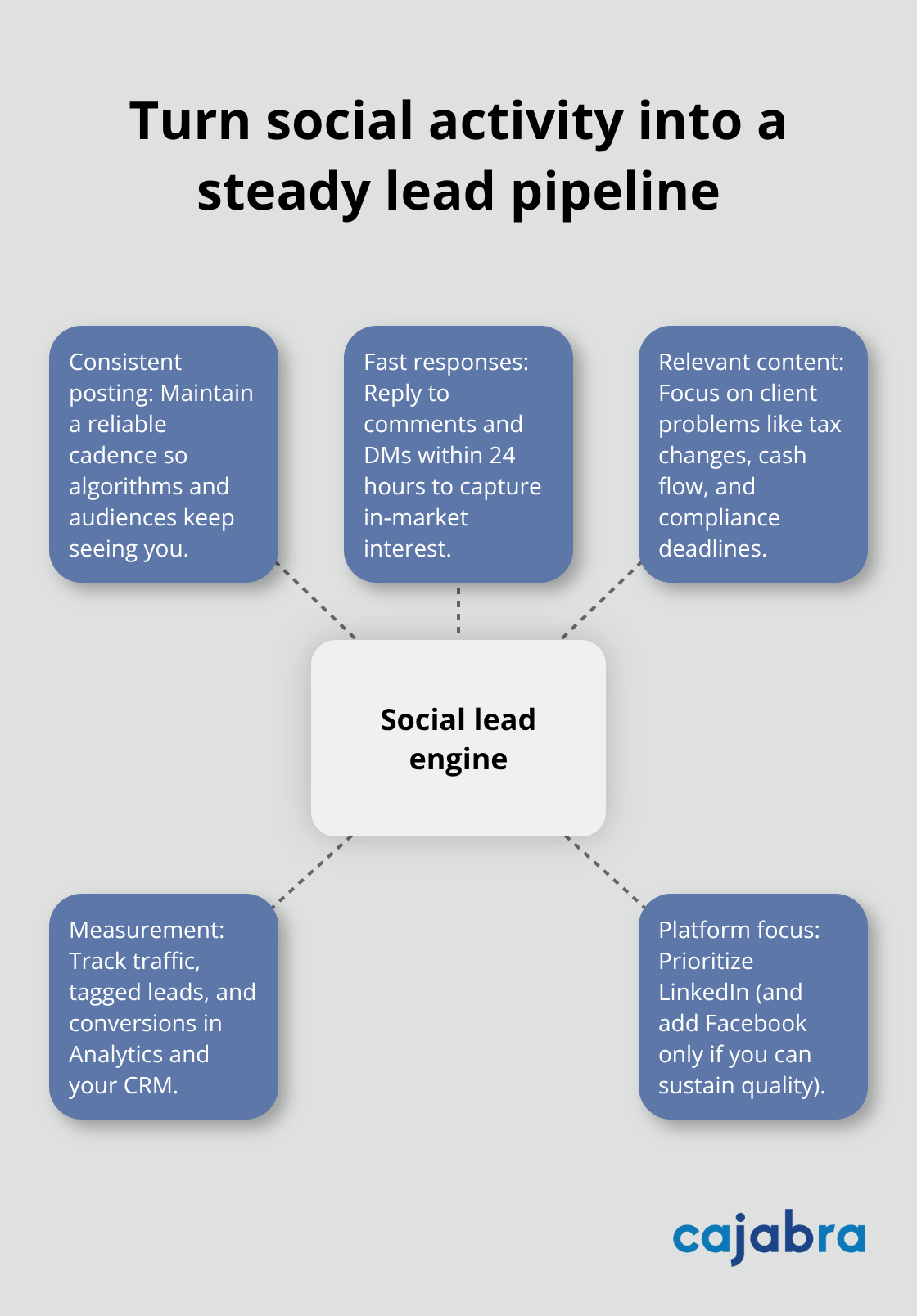
Inconsistent posting destroys momentum faster than not posting at all. A firm that posts three times in January, disappears for February, and returns in March trains its audience to ignore notifications. LinkedIn's algorithm prioritizes content from accounts that post regularly, effectively punishing irregular posting by showing your content to fewer people. Facebook operates similarly-posts from inactive pages receive less reach. You need a sustainable cadence: LinkedIn performs well with one thoughtful post per week, while Facebook can handle 1-3 posts weekly. Choose a frequency your team can actually maintain, then schedule posts in advance using Buffer or a similar tool to remove the excuse that you forgot.
Irrelevant content is equally damaging. A post about your firm's holiday party or an employee's birthday might feel warm and human, but it doesn't attract business owners searching for accounting solutions. The content that converts focuses on problems your ideal clients face: tax law changes affecting their industry, common mistakes that cost money, or compliance deadlines they might miss. Track which posts generate engagement and leads, then create more of that content. Your social feed should reflect the problems you solve, not the life you live at the office.
When someone asks a question on your post or sends a direct message inquiring about your services, they're showing active interest. A response within hours-not days-separates firms that win clients from those that lose them to competitors who appear first in search results and maintain active engagement. Assign one team member ownership of social inbox monitoring, or use a CRM that consolidates messages from multiple platforms. This single operational change (quick response times) converts more prospects than any other social media tactic.
Firms that don't track results spend money and time on social media while remaining completely blind to its impact. Set up Google Analytics to track traffic from social platforms to your website, use your CRM to tag leads that came from social, and measure whether social-sourced leads actually become paying clients. Without this data, you operate on assumptions rather than facts. Most accounting firms should expect 30 to 90 days before seeing consistent lead generation from social media, which means measuring results requires patience and a clear baseline for comparison.
Social media marketing for accounting firms works when you commit to consistency, relevance, and measurement. The firms that win post regularly on platforms where their ideal clients spend time, respond quickly to inquiries, and track which efforts actually produce leads and revenue. Start with one platform-LinkedIn for business owners and financial decision makers-and post one thoughtful piece of content per week addressing real problems your clients face. Add Facebook only if you can maintain 1-3 posts weekly with educational content and firm updates. Schedule posts in advance using Buffer so inconsistency doesn't sabotage your efforts.
Assign one team member to monitor messages and comments, responding within 24 hours to anyone showing genuine interest. Set up Google Analytics to track social traffic to your website and tag leads in your CRM that came from social channels. After 90 days, you'll have real data showing whether your social efforts produce actual clients. Track which posts generate engagement and which fall flat so you can adjust your strategy based on what actually works.
The biggest mistake accounting firms make is treating social media as optional or delegating it without clear expectations. If you're ready to move beyond sporadic posting and build a social presence that attracts retainer-based clients, Cajabra helps accounting firms secure consistent leads through strategic marketing systems. Start this week with one platform, one realistic posting schedule, and one clear measurement system.