

Creating great content is only half the battle. The real challenge is getting that content in front of the right people at the right time.
At Cajabra, LLC, we've seen firsthand how strategic content distribution transforms reach and engagement. The channels you choose, when you publish, and how you measure results determine whether your content thrives or gets lost in the noise.
Social media dominates content distribution strategy, with 84% of B2B marketers using paid channels to distribute content, and among those, 73% use social media advertising. However, raw social presence means nothing without audience alignment. Instagram works differently than LinkedIn, which works differently than X, and posting identical content across all platforms dilutes your message. The platforms where your actual buyers spend time are the only ones that matter. LinkedIn tends to drive better results for B2B content because professionals actively seek industry insights there, while Instagram demands visual storytelling and trending audio. Test each platform with your core content, measure which ones drive actual traffic and leads rather than vanity metrics, and then focus on the two or three that perform best. Social sharing alone rarely converts, so treat social as a top-of-funnel awareness tool that funnels people toward owned channels where real engagement happens.
Email newsletters beat social platforms for direct audience engagement because you own the relationship. A targeted email list of 40 engaged subscribers who signed up because they genuinely wanted your insights will outperform blasting 5,000 disinterested followers. Segment your email list by buyer stage and send content that matches where people sit in their decision journey. A prospect in early research needs educational content about industry challenges, while someone further along needs comparison guides and case studies. Personalization matters too: reference past interactions or company details when possible.
Paid advertising amplifies distribution when organic reach plateaus. Google Ads and LinkedIn ads target people actively searching for solutions, while retargeting ads remind website visitors who didn't convert the first time. The #1 organic search result captures roughly 27.6% of clicks versus 2.6% for the tenth result, so paid ads help your content compete when SEO rankings take time to build. Start with small budgets on your top-performing content pieces, track which ads drive leads versus just impressions, and scale only what converts. Diversify your distribution channels across owned, earned, and paid media to maximize reach-the channels you select and how you allocate resources across them set the foundation for everything that follows, which is why timing your distribution matters just as much as choosing the right platforms.
The time you publish determines whether your content reaches your audience or vanishes into the feed. LinkedIn engagement peaks on Tuesday through Thursday between 7 AM and 9 AM, when professionals check their feeds before starting work. Twitter moves faster, with engagement concentrated around lunch hours and early evening when people take breaks. Facebook sees steady engagement throughout the day but spikes on weekends. Your specific audience, however, may follow different patterns. A B2B software company selling to finance teams needs different timing than a consumer brand targeting students. Test your content across three different time slots over two weeks, track which times generate the most clicks and comments, then commit to that window.
Posting too frequently exhausts your audience and triggers unsubscribes. Consistency matters more than volume-brands publishing once or twice weekly maintain stronger engagement than those flooding feeds daily. Most successful publishers follow a cadence of one major content piece per week across owned channels, with social amplification spread across two to three posts that week. Email newsletters work best when sent on a predictable schedule that your subscribers expect. If you commit to Thursday mornings, stick with Thursday mornings.
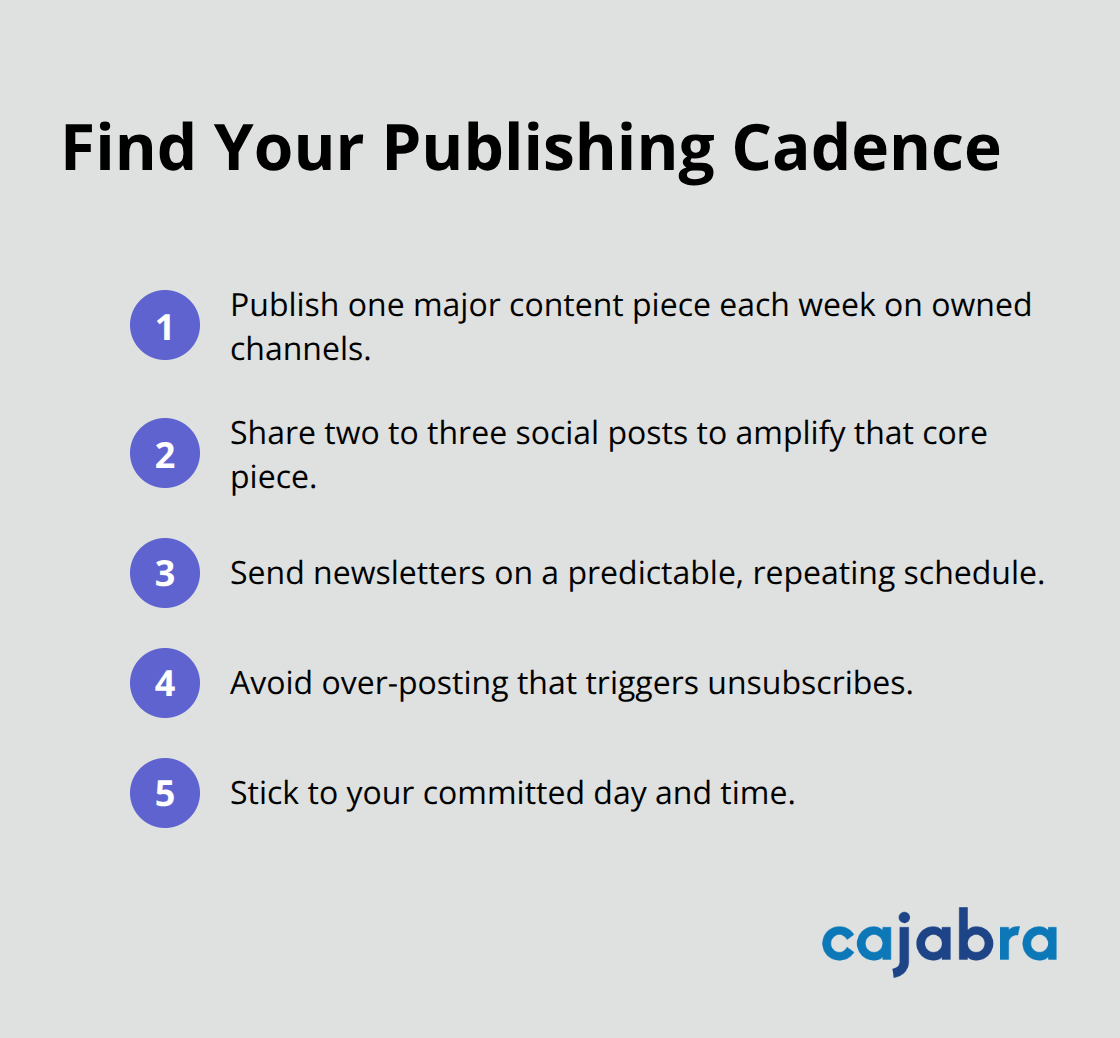
Subscribers who anticipate your message open it at higher rates than those surprised by random sends.
Seasonal timing and trending topics demand flexibility within your core schedule. Industry conferences, budget cycles, and holiday seasons create windows where your audience actively searches for solutions. Accounting firms see increased demand for tax strategy content in Q1 and Q4. SaaS companies notice budget planning peaks in September and October. News and trending topics offer quick distribution wins if you respond within hours rather than days. A brand that publishes thoughtful commentary on industry news within four hours of the story breaks captures more attention than one that publishes a week later.
Chasing every trend exhausts your team and dilutes focus. Instead, identify three to five predictable seasonal moments relevant to your industry and plan content months in advance. Repurpose evergreen content during slow periods, then shift to trend-responsive content during high-demand seasons. Track which seasonal angles drive the most leads and revenue, then double down on those specific windows next year. The brands that win at distribution publish strategically at moments when their audience actively listens-not the ones publishing constantly. This strategic approach to timing sets the stage for measuring whether your distribution efforts actually move the needle, which brings us to tracking performance across your channels.
Track metrics that connect directly to revenue, not vanity numbers that make dashboards look impressive. Click-through rates and impressions mean nothing if they don't convert to leads or clients. Focus on metrics that matter: how many qualified leads each channel produces, what those leads cost, and whether they actually become paying clients. Email open rates tell you your subject line works, but click-through rates show whether your content resonates enough to drive action. Social media follower counts are meaningless; referral traffic from social to your website reveals which platforms actually move people toward conversion.
Add UTM parameters to every link you distribute so you know exactly which channel, campaign, and content piece drove each visitor. Google Analytics 4 lets you track user journeys across devices and platforms without extra work. Establish a baseline for each channel during your first month, then measure improvements against that baseline rather than against industry averages that may not apply to your specific audience. This foundation prevents wasted effort on channels that look good in reports but produce no actual results.
Different distribution channels require different measurement approaches because they serve different purposes in your funnel. Email produces the highest conversion rates because you reach people who already know you, so track email click-through rates and conversion rates separately from social media, which functions primarily as awareness. LinkedIn ads targeting B2B decision-makers should be measured on cost-per-lead and lead quality, not impressions. Organic search traffic matters less for volume and more for intent; someone landing on your website from a search query about your specific solution converts at higher rates than someone who clicked a random social post.
Set specific conversion goals for each channel based on what success looks like: email might target a 3 percent click-through rate, while organic search targets a 15 percent conversion rate from visitor to lead. Test different messaging, content formats, and distribution timing on smaller segments first, then measure which variations outperform before scaling to larger audiences.
Stop guessing and start testing methodically. Change one variable at a time so you know what actually drove results. Send the same email to two segments with different subject lines, track which one produces more clicks, then use the winning subject line for future sends. Test publishing your blog post at different times to see which generates more traffic in the first 24 hours, then lock in that timing. Run controlled experiments with different headlines and landing pages simultaneously, allocate equal budget to each, and measure which combination produces the lowest cost-per-lead.
Most distribution improvements come from small, incremental wins rather than dramatic overhauls. A 10 percent improvement in email open rates from better subject lines, combined with a 15 percent improvement in social click-through rates from better visuals, compounds into significant revenue growth over quarters. Document every test, including what you tested, what won, and why, so you build institutional knowledge rather than repeating failed experiments.
The brands winning at distribution treat it as an ongoing optimization process where data informs decisions, not assumptions. Once you identify which channels, timing windows, and content formats produce the best results, allocate more budget and effort to those winners. Reduce or eliminate spending on channels that consistently underperform, even if they seem like they should work. Your audience's actual behavior matters far more than industry best practices or what competitors claim to do. Redirect resources from low-performing channels toward the two or three channels that consistently produce qualified leads at acceptable costs.
Content distribution works best when you treat it as an ongoing system rather than a one-time project. Start by auditing which channels produce qualified leads at acceptable costs, then cut the underperformers immediately and reallocate that effort toward your top two or three channels. Most teams waste resources spreading themselves thin across platforms that don't move the needle, so this ruthless focus separates winners from the rest.
Build a sustainable system by establishing clear responsibilities and schedules for your distribution efforts. Assign someone to manage email sends on your committed day and time, designate a person to monitor social platforms during peak engagement windows, and create a simple spreadsheet tracking which content pieces perform best on which channels. Small improvements compound over time-a 10 percent boost in email click-through rates paired with a 15 percent improvement in social referral traffic creates meaningful revenue growth.
For accounting firms, Cajabra helps move accountants from overlooked to overbooked through strategic marketing systems that secure retainer-based clients. Identify your single best-performing distribution channel this month and commit to doubling your effort there next month, then measure the results and repeat with your second-best channel.