

Email marketing for accounting firms delivers results that other channels struggle to match. The ROI speaks for itself-firms that prioritize email see stronger client retention and more qualified leads.
At Cajabra, LLC, we've seen firsthand how the right email strategy transforms client relationships. This guide walks you through building a system that works, avoiding common pitfalls, and measuring what actually matters.
Email marketing generates approximately $36 in revenue for every $1 spent-a return that far exceeds what most accounting firms see from paid advertising, social media, or traditional outreach. This isn't theoretical. Firms that implement consistent email campaigns report stronger client retention and a steady stream of qualified leads without the acquisition costs that drain marketing budgets.
The reason is straightforward: email reaches decision-makers directly. Business owners and individual clients check email regularly, and when an accounting firm sends timely, relevant information about tax deadlines, cash flow management, or regulatory changes, the message lands in an inbox they actively monitor. This direct access means your firm competes on expertise and value, not on advertising spend.
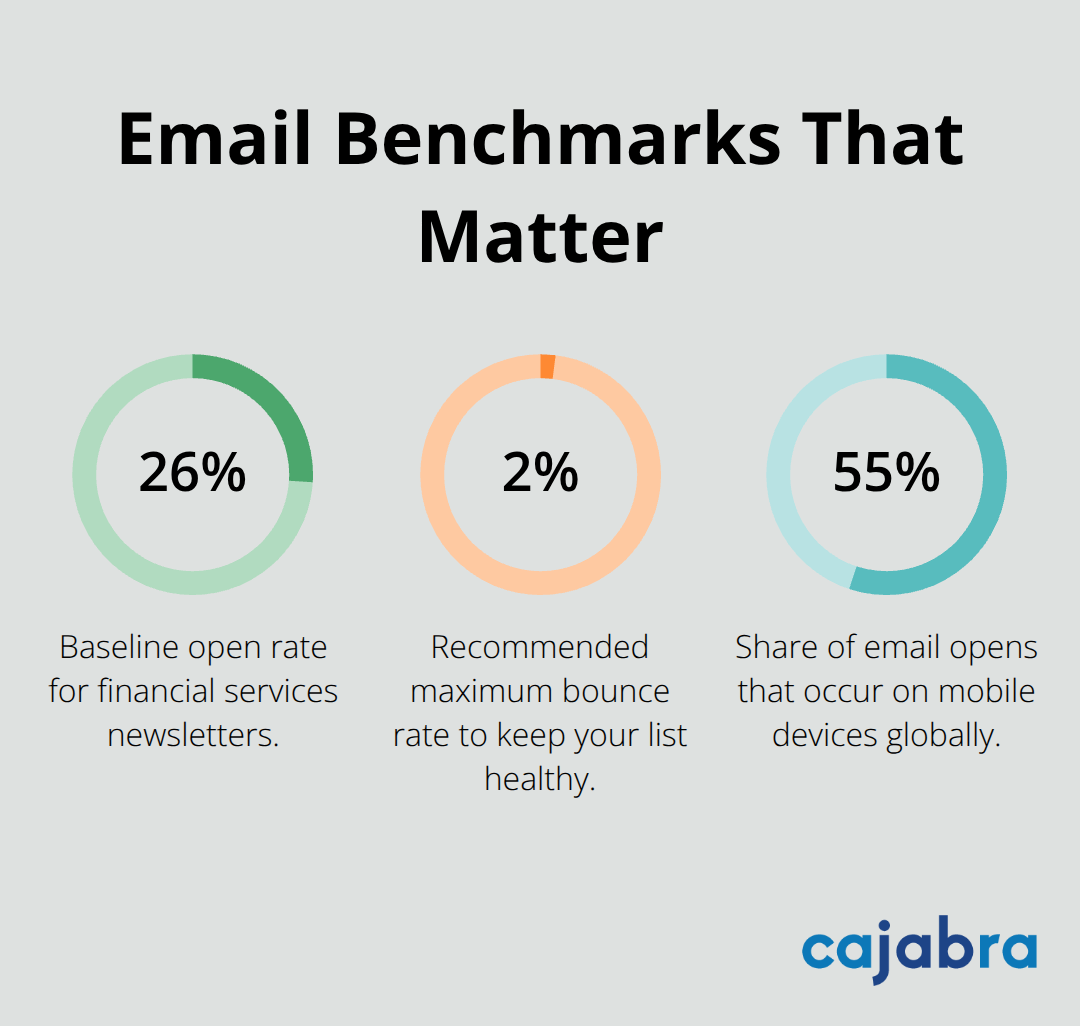
The relationship-building aspect matters equally. Current clients who receive regular newsletters with actionable tax tips or business insights develop deeper trust. Prospective clients who see your firm sharing free, practical guidance recognize competence before they ever schedule a consultation. Research shows that financial services newsletters average a 26% open rate-higher than most industries-which signals that accountants' audiences genuinely want this content.
The consistency of email also works in your favor. A single tax deadline reminder email sent at the right time can prompt a client to schedule a planning session. A monthly newsletter keeps your firm top-of-mind without requiring the constant content production that social media demands. Unlike ads that disappear once you stop paying, email builds cumulative value. Each message reinforces your positioning and creates touchpoints that compound over time.
Open rates tell you whether your subject lines resonate with recipients. Try for at least 26% based on financial services benchmarks, though many accounting firms exceed 30% with targeted segmentation. Click-through rates should hover around 2.7% or higher-this metric reveals whether your content actually addresses what clients care about.
Conversion rates vary widely, but tracking how many email recipients become paying clients or schedule consultations shows your true ROI.
The real test is this: compare the cost of sending 500 emails monthly to the value of even one new client retainer. For most accounting firms, that single client pays for years of email marketing. Bounce rates should stay below 2%, which indicates your list is clean and engaged. Unsubscribe rates above 0.5% signal that your content misses the mark or you're sending too frequently.
These metrics guide every decision you make going forward-and they reveal which segments of your audience respond best to different types of messages. Understanding these patterns positions you to refine your approach before moving into the strategic work of segmentation and content creation.
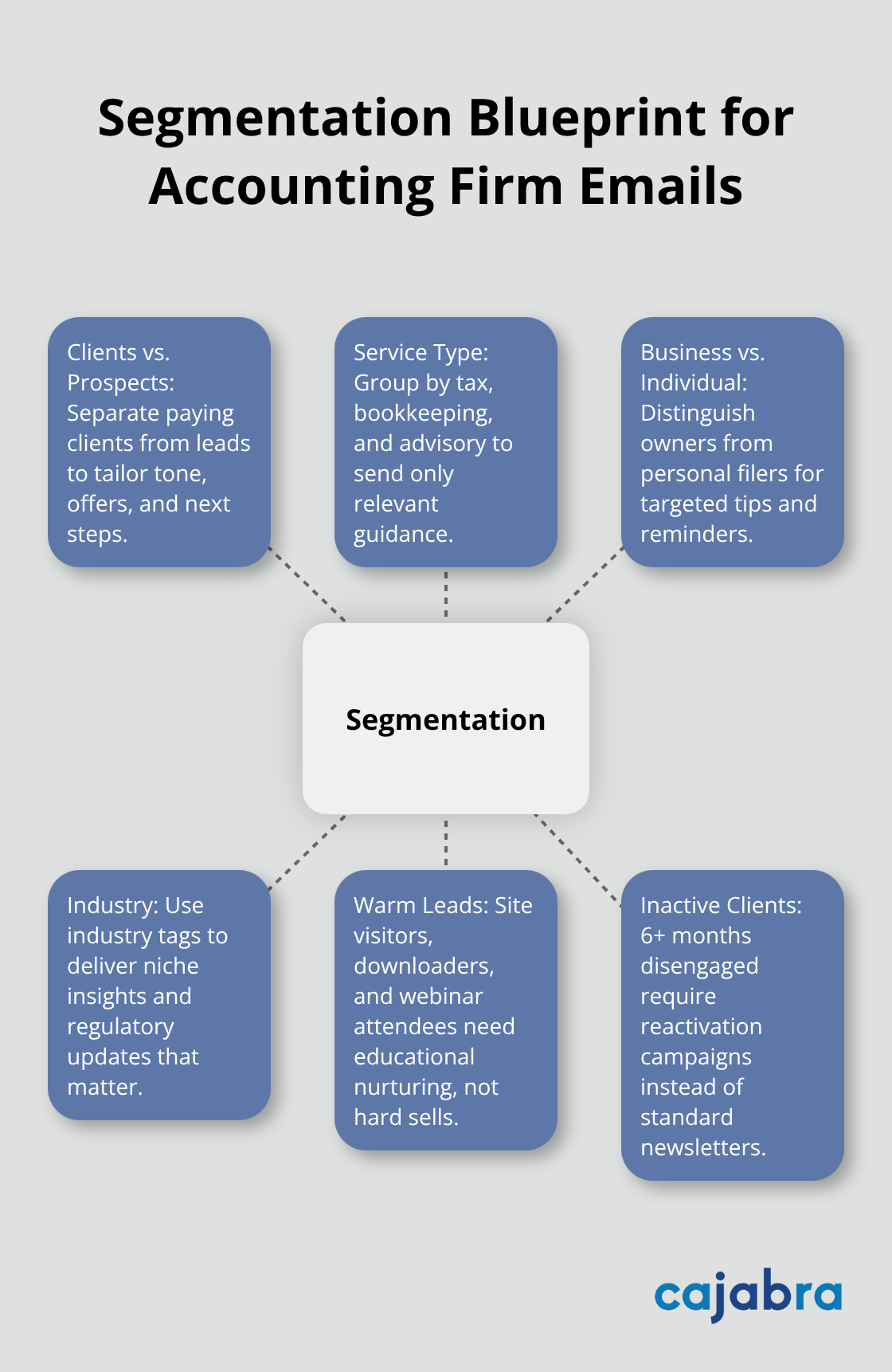
Your current clients and contacts form your foundation, and they've already demonstrated trust in your firm. Pull everyone from your accounting software, CRM, and email archives who opted in to communications. This isn't a starting point for growth-it's your launch pad for demonstrating results before you expand. Segment this list immediately by what you know: clients versus prospects, service type (tax, bookkeeping, advisory), business versus individual, and industry if you track it. A business owner receiving tax tips for freelancers doesn't care about payroll guidance.
Segment ruthlessly, and your open rates climb.
Your second segment should be warm leads-people who visited your website, downloaded a guide, or attended a webinar but didn't hire you yet. These prospects respond better to educational content than hard sells. A third segment covers inactive clients who haven't engaged in six months or longer. These need reactivation campaigns, not standard newsletters. Most accounting firms ignore this segment and lose clients they could recover with a single well-timed message about a service change or tax law update.
Content creation stops being theoretical once you segment. Someone managing a small e-commerce business needs cash flow management tips and quarterly tax planning reminders. A contractor needs deduction tracking strategies and estimated tax payment schedules. An established corporation needs year-end planning and entity structure optimization insights. Your newsletters should address these specific pain points, not general accounting concepts. This targeted approach transforms your email from a broadcast tool into a relationship-building asset that speaks directly to what each segment actually cares about.
Automation handles the consistency that makes email work. Set up welcome sequences that trigger immediately when someone joins your list-three emails over ten days covering your firm's approach, your core services, and client testimonials. Then build seasonal campaigns around tax deadlines: one email ninety days before filing, another forty-five days before, a reminder thirty days out, and a post-filing follow-up offering planning for next year. These sequences repeat annually for every new contact who joins your list.
Most modern platforms-Mailchimp, ActiveCampaign, HubSpot-offer templates and drag-and-drop builders that eliminate technical barriers. Schedule these campaigns in advance so you're not scrambling during tax season. Set them up once in January, and they run on autopilot for the next twelve months. Track which segments open your emails, click your links, and actually schedule consultations. That data reveals which content resonates and which segments need different messaging entirely.
With your list segmented and automation in place, you're ready to address the mistakes that derail most accounting firms' email efforts.
Most accounting firms insert a first name into a generic template and call it personalization. This approach fails because decision-makers spot the lack of genuine customization immediately. A business owner who received three emails about tax deductions for W-2 employees last month does not need the same message this month, yet many firms send identical newsletters to everyone on their list regardless of what services they actually use or what questions they have asked. The data confirms this costs responses. Firms that use dynamic content blocks-which change based on recipient type, industry, or past interactions-see open rates jump to 35% or higher compared to 22% averages for one-size-fits-all sends.
Personalization extends far beyond names. Reference the specific service they hired you for, mention a previous conversation about their cash flow concerns, or highlight tax strategies relevant to their business type. If your email platform does not support conditional content based on custom fields, switch platforms immediately. Mailchimp, HubSpot, and ActiveCampaign all offer this functionality at entry-level pricing. The firms winning with email treat each segment as a distinct audience that deserves messaging tailored to their actual situation, not a broadcast list receiving identical content.
Accounting firms often send newsletters monthly on the first Tuesday regardless of whether that is when their audience reads email, then wonder why open rates crater to 15%. Worse, some firms send sporadic emails with months of silence between messages, which trains subscribers to ignore them entirely. Email frequency should match your audience's expectations and your content calendar. Send quarterly newsletters consistently on the same day each quarter, but layer in seasonal campaigns around tax deadlines ninety, sixty, and thirty days before filing.
Most professionals check email between 9 a.m. and noon on weekdays, but your specific list may differ. Use your platform's send-time optimization feature if available, which tests different times and learns when your audience engages highest. Schedule emails in advance so you do not scramble during busy season, and establish a cadence your team can maintain year-round without burnout.
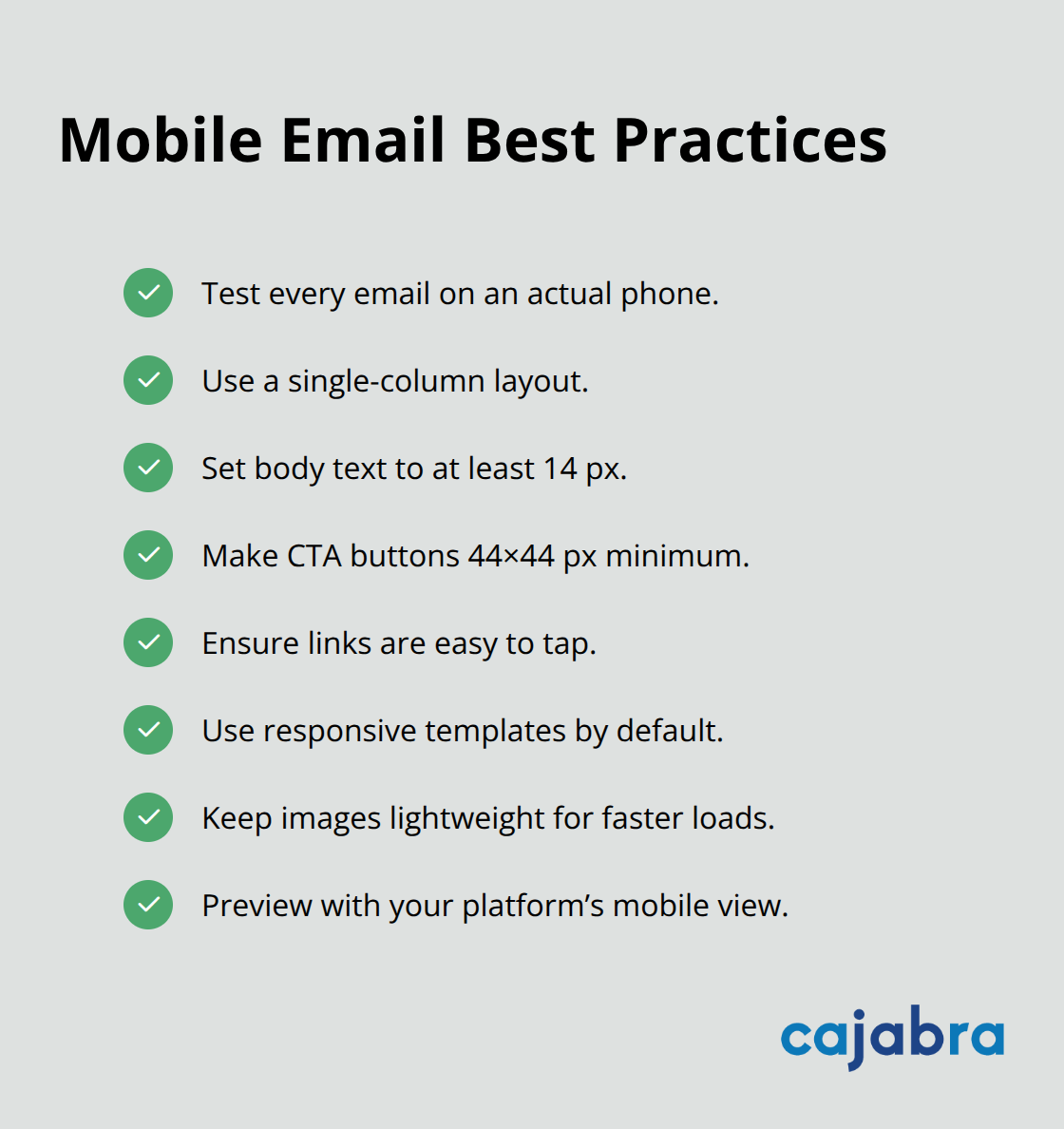
Mobile devices account for 55% of email opens globally, yet firms still send emails designed for desktop with tiny fonts, unclickable links, and images that do not scale properly. Test every email on mobile before sending by viewing it on an actual phone or using your platform's mobile preview. Keep body text at least 14 pixels, use single-column layouts, and make call-to-action buttons thumb-friendly at 44 by 44 pixels minimum.
An accounting firm that sends beautifully designed emails optimized for desktop but unreadable on mobile essentially throws away half their engagement. Set up mobile-first design as your standard, not an afterthought. Your platform should handle responsive design automatically, but verify this before committing to any tool.
The firms that treat mobile optimization as non-negotiable capture significantly more responses from their email efforts.
Email marketing for accounting firms compounds over time, with each message reinforcing your expertise and keeping your firm top-of-mind when clients need help. Start by auditing your current email list, pulling contacts from your accounting software and CRM, then segment by client type and service to identify which segments have gone silent. Set up a welcome sequence for new contacts that covers your firm's approach and core services, then build seasonal campaigns around tax deadlines ninety, sixty, and thirty days before filing.
Track open rates, click-through rates, and conversion rates from day one because these metrics reveal which segments respond to your content and which need different messaging. A 26% open rate serves as your baseline for financial services audiences, but targeted segmentation regularly pushes this higher, and when you see a segment consistently opening emails and clicking links, that segment is ready for a direct offer to schedule a consultation. The real measure of success is straightforward: how many new clients did email marketing bring in, and what is the lifetime value of those relationships compared to what you spent sending messages?
For most accounting firms, even one new retainer client pays for a year of email marketing, and the consistency of email also reduces client churn because regular communication keeps your firm visible and reinforces the value you deliver. We at Cajabra, LLC understand that email marketing is one piece of a larger growth strategy, and our approach helps accounting firms move from overlooked to overbooked by securing retainer-based clients through proven systems. Explore how Cajabra can help your firm grow and accelerate your email results with a complete marketing system that attracts ideal clients.