

Accountants know that clients don't choose based on marketing claims alone. Trust comes from what other clients say about your work.
Social proof transforms how prospects perceive your firm. At Cajabra, LLC, we've seen firsthand how testimonials, reviews, and certifications shift client decisions in your favor.
Word of mouth dominates how accounting firms win new clients. Research from the American Institute of CPAs shows that referrals and client recommendations remain the strongest driver of new business, outpacing digital advertising and cold outreach by a significant margin. This isn't coincidence. When a prospect hears directly from another business owner that your firm saved them thousands in taxes or streamlined their bookkeeping, that carries infinitely more weight than anything you say about yourself on your website. Prospects assume you'll highlight your strengths in your marketing, so they discount those claims naturally. They don't assume other clients would lie about their experience, which makes third-party validation extraordinarily powerful. The psychology is straightforward: people believe peers more than institutions because peers have no financial incentive to flatter you.
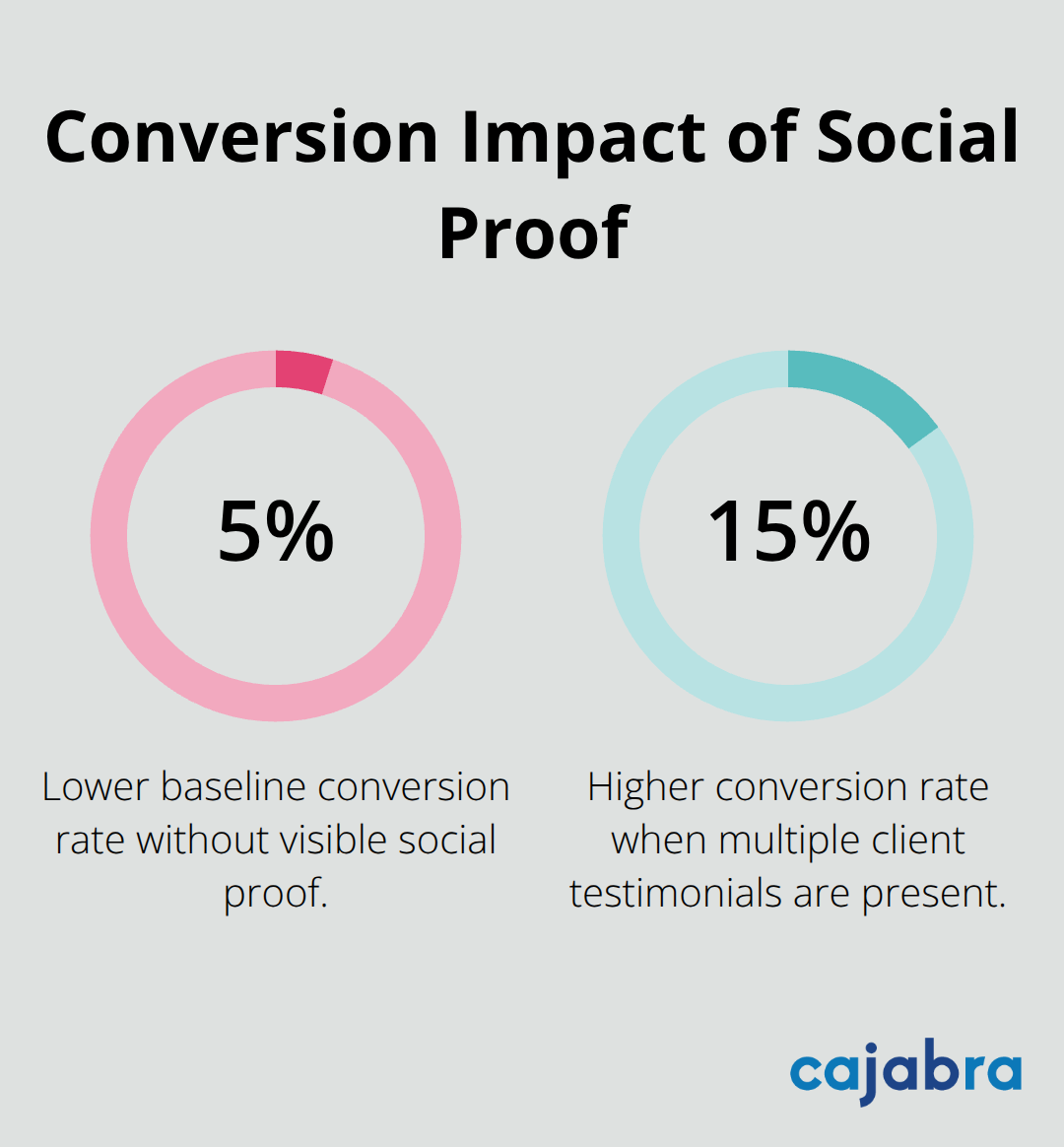
Studies from Nielsen show that people trust recommendations from other people over branded content. For accounting specifically, prospects actively seek out reviews, ask for references, and check what existing clients say before scheduling a consultation. Google Reviews carry particular weight because they require a verified account to post, meaning fabricated testimonials are harder to slip through. Firms with strong review profiles and consistent five-star ratings see higher conversion rates on their websites and attract more qualified leads. LinkedIn recommendations function similarly in the B2B space. When a client publicly endorses your expertise on their profile, other prospects viewing your profile immediately perceive you as credible. Prospects who see three or more client testimonials on your website are significantly more likely to contact you than those landing on pages with no social proof. This isn't marginal improvement. It's the difference between converting five percent of visitors and converting fifteen percent. That compounds quickly when you run consistent traffic to your site.
Certifications and awards matter, but only when paired with client outcomes. An accounting firm can display their CPA credentials all day, yet a single case study showing a manufacturing company reduced their tax liability by thirty-seven thousand dollars speaks louder. The specificity matters enormously. Generic testimonials like "great service, highly recommend" register as noise. Testimonials that mention exact problems solved and measurable results stick in prospects' minds. When you showcase that your firm helped a client identify unclaimed tax credits worth fourteen thousand dollars annually, that prospect reading it immediately thinks about their own tax situation and wonders if you could do the same for them. This transforms social proof from a trust signal into a lead magnet. The most effective approach combines multiple proof types across your marketing channels (LinkedIn, your website, service pages). LinkedIn should feature client recommendations and case study highlights. Your website homepage should display Google Reviews prominently. Your service pages should link to detailed case studies with specific dollar amounts saved. This layered approach means a prospect encounters repeated validation from different sources, each reinforcing the others.
Vague praise accomplishes nothing. A prospect scrolling through your testimonials needs concrete evidence that you solve their specific problems. Instead of "they helped us with our taxes," show that you identified a three-year tax overpayment worth eight thousand dollars or that you restructured a client's entity to save them twelve percent annually on their tax bill. Numbers stick. Percentages stick. Dollar amounts stick. When you present these results alongside the client's industry or business type, prospects in similar situations immediately recognize themselves in your case studies. This recognition is what converts browsers into leads. The prospect doesn't just think you're credible. They think you're credible for them specifically. That distinction matters enormously when prospects evaluate multiple accounting firms. They want proof that you've solved problems for businesses like theirs, not just any business. This is where most accounting firms fail. They collect testimonials but fail to extract the specific outcomes that make those testimonials powerful. The next chapter explores how to systematically collect these testimonials and transform them into case studies that actually move prospects toward a decision.
Client testimonials without specifics waste space. The accounting firms winning the most clients pair detailed case studies with quantified outcomes that prospects recognize in their own situations. A case study showing how you helped a construction company recover fourteen thousand dollars in missed tax deductions works because the prospect immediately thinks about their own missed deductions. The industry context matters as much as the dollar amount. When prospects see proof tailored to their sector, conversion rates jump significantly.
The recommendation text matters more than the volume. A recommendation stating you helped a client implement cloud accounting software that reduced their month-end close time from five days to two days creates a mental image of concrete value. Generic praise like "excellent work" and "great communication" registers as background noise that prospects skip over.

Google Reviews impact both traditional local search rankings and citations in AI Overviews. Firms with forty or more Google Reviews and an average rating above 4.7 stars consistently report higher inquiry volume than competitors with fewer reviews. LinkedIn recommendations function differently but equally powerfully in the B2B space. When a prospect lands on your profile and sees three or more recommendations mentioning specific expertise areas like tax strategy or bookkeeping automation, they perceive you as established and trusted by peers.
Certifications and awards matter only when paired with client outcomes. Your CPA license establishes baseline credibility, but it doesn't differentiate you from the thousands of other CPAs in your market. Industry awards, however, can signal specialization. If you've won recognition for tax strategy or bookkeeping for specific industries, that becomes a proof point worth highlighting. Most accounting firms display credentials without context. Instead, position them alongside client results. For example, mention your CPA designation and then immediately reference a specific case showing how that expertise delivered measurable value.
The collection process determines proof quality. Systematically request testimonials after successful engagements and you'll yield dramatically better results than sporadic requests. Send a simple email within two weeks of completing a significant project, asking the client to describe the specific problem you solved and the measurable outcome. Prompt them for numbers: tax savings, time saved, cash flow improvements, error reductions. Most clients will provide these details if you ask directly.
Transform their response into a short case study with a headline, problem statement, your solution, and quantified results. Publish these case studies on your service pages and LinkedIn. For Google Reviews, send a direct link after positive engagements and you'll make the process friction-free. Firms that email a direct Google Review link to clients see review submission rates five to ten times higher than firms that expect clients to find and navigate Google's review interface independently.
Display your best reviews prominently on your homepage and service pages. Prospects scrolling through your site should encounter multiple proof points within the first thirty seconds. Place testimonials in sidebars, above the fold on service pages, and within case study sections. Vary the proof types you display.
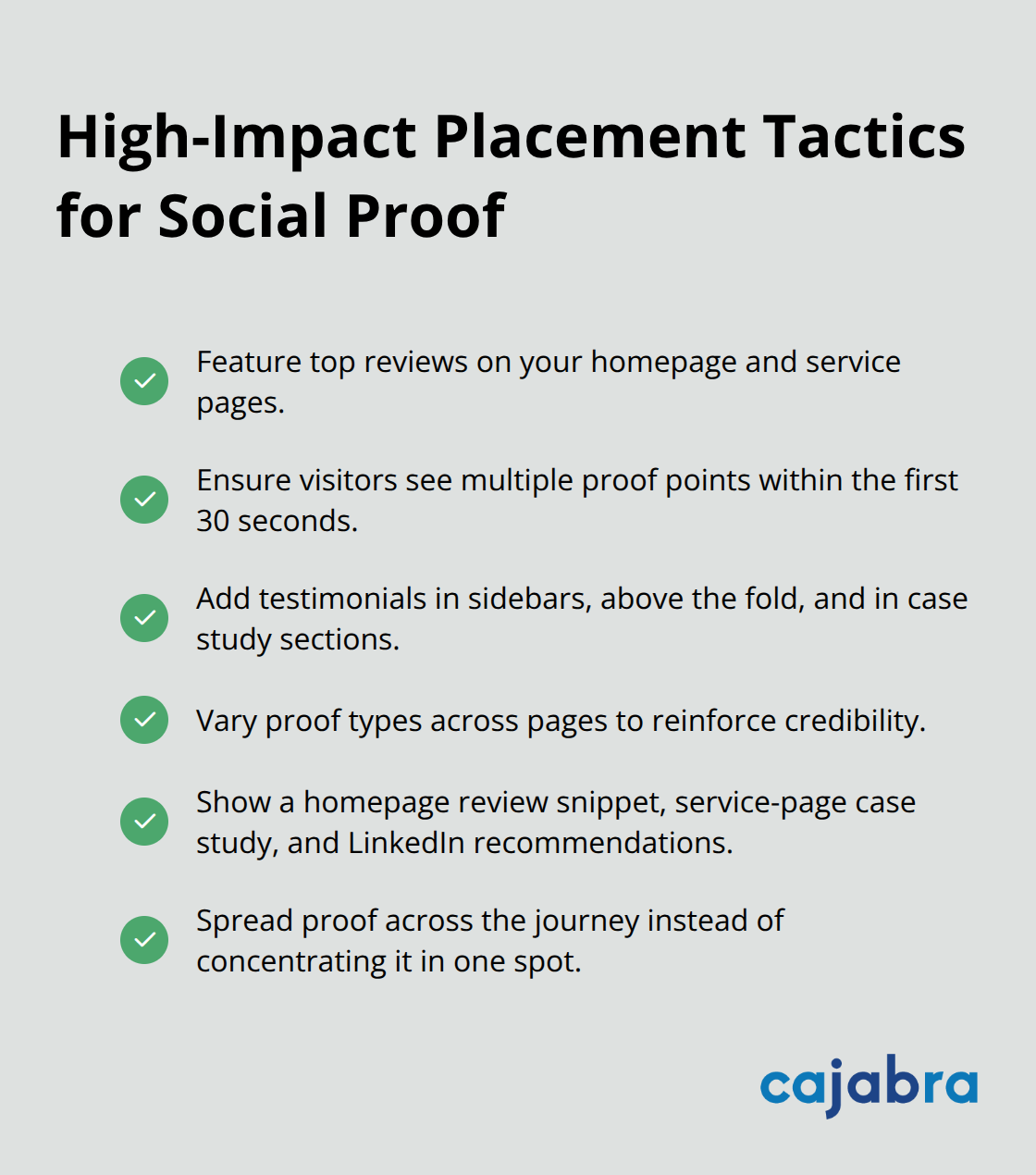
A prospect might see a Google Review snippet on your homepage, a detailed case study on your tax strategy page, and LinkedIn recommendations on your profile. This repetition from different sources compounds credibility far more effectively than concentrating all proof in one location.
Track which proof types generate the most leads by using unique landing pages for different case studies and monitoring which drive the highest conversion rates. Over time, this data reveals whether video testimonials, written case studies, or review aggregations perform best for your specific audience. The proof types that resonate most with your prospects should inform how you allocate your collection efforts going forward.
Collecting reviews and testimonials works only if you build it into your regular business process. Most accounting firms wait for clients to volunteer feedback, which almost never happens. Instead, send a structured email request within two weeks of completing a significant engagement. The timing matters because the client's satisfaction remains fresh and they haven't yet moved on to their next priority. Keep the request simple: ask them to describe the specific problem you solved and the measurable outcome. Prompt directly for numbers.
Most clients will provide tax savings, time saved, cash flow improvements, or error reductions if you ask explicitly. For Google Reviews, send a direct review link in your email rather than expecting clients to search for your business page and navigate Google's interface independently. Firms that email direct Google Review links see higher submission rates than those requesting reviews without a link. This single change transforms review collection from sporadic to systematic.
Set a calendar reminder to request reviews after every completed project and assign someone on your team ownership of this process. Within six months of consistent requests, you'll accumulate thirty to fifty reviews. At forty or more reviews with a 4.7-star average, your visibility in local search results and AI-generated search summaries increases substantially. LinkedIn recommendations follow a similar pattern. After delivering strong results, send the client a message asking them to endorse your specific expertise on LinkedIn. Make it easy by suggesting exact language they could use. Most professionals will spend two minutes writing a recommendation if you remove friction from the request.
A case study differs fundamentally from a testimonial. A testimonial consists of one or two sentences of praise. A case study presents a structured narrative that shows a prospect their own situation reflected back at them. Start with a headline that names the client's industry and the specific outcome. Then describe the problem they faced before working with you. Next, explain your solution in plain language without jargon. Finally, quantify the results with specific numbers.
For example: Manufacturing company struggled with entity structure tax inefficiency. You restructured their business entity and identified overlooked tax credits. Result: annual tax liability reduced by twelve percent, saving them eighteen thousand dollars yearly. Notice the specificity. A prospect running a manufacturing business reads this and immediately thinks about their own tax situation. They see themselves in the case study. This recognition drives conversion far more effectively than generic praise.
Publish these case studies on your service pages where prospects evaluating that specific service will encounter them. A prospect researching tax strategy should see case studies demonstrating tax savings on that page. Create short versions for LinkedIn, sharing the industry context and outcome in a post with a link to the full case study on your website. Track which case studies generate the most leads (by monitoring which ones drive traffic and conversions to your website). Over time, this data reveals whether prospects respond more strongly to tax savings stories, time-savings stories, or cash-flow improvements. Allocate your case study creation efforts toward the proof types that resonate most with your target clients.
Video testimonials dramatically outperform written testimonials in conversion rates because they feel authentic in ways text cannot replicate. Record a short video of a satisfied client describing the problem you solved and the specific outcome. Keep videos under ninety seconds. Authenticity matters more than production quality. A client speaking directly to the camera about their experience generates far more credibility than a polished corporate video.
Publish these videos on your homepage, service pages, and LinkedIn. Prospects who watch even thirty seconds of a client testimonial video are significantly more likely to schedule a consultation than those who only read text. The combination of seeing a real person, hearing their voice, and hearing them describe concrete results creates trust that written testimonials struggle to match.
Social proof shifts how prospects evaluate your firm fundamentally. When a prospect sees that you saved other accounting clients thousands in taxes or streamlined their operations, they stop viewing you as one option among many and instead see you as the firm that solves problems like theirs. This perception change happens because prospects trust outcomes from real clients far more than marketing claims, and the firms winning the most accounting clients understand this reality completely.
Building social proof requires consistency rather than complexity. Request reviews after every completed engagement, transform client feedback into case studies that show industry context and measurable results, and publish these across your service pages and LinkedIn where prospects actively search for proof that you deliver. Within six months of systematic collection, you'll accumulate enough proof to shift how prospects perceive your firm, and prospects will contact you because they've seen evidence that you solve problems for businesses like theirs.
The competitive advantage belongs to firms that build trust first (while competitors focus on features and credentials, you showcase real client outcomes). Prospects arrive at consultations already convinced you can help them because they've seen the proof, read the case studies, and watched video testimonials from clients in their industry. We at Cajabra, LLC help accounting firms implement this exact approach through our Premium Online Presence Package, which modernizes your digital footprint and positions your firm as an industry leader.