

Most websites have content scattered across pages, blog posts, and resources that nobody's actually reviewed in months or years.
A content audit fixes that. It's a systematic review of everything you've published, showing you what's working, what's broken, and what's missing entirely.
At Cajabra, LLC, we've seen firsthand how audits uncover hidden ranking problems and wasted opportunities. This guide walks you through the process step by step.
A content audit isn't just about counting pages. It's about finding what's actually working in your digital footprint and what's actively harming your performance. When you audit content, you examine every piece you've published against three critical measures: how it performs in search results, whether visitors actually engage with it, and whether it serves your business goals. Most websites discover that 30 to 40 percent of their content either receives almost no traffic or actively conflicts with other pages competing for the same keywords. Google explicitly warns that repetitive, thin, or low-quality content damages your search rankings, which means outdated blog posts or duplicate landing pages aren't just sitting idle-they're pulling your authority down. A proper audit identifies these problem pages so you can refresh them with current data and examples, consolidate them into stronger pieces, or remove them entirely.
Multiple pages targeting the same topic or keyword create keyword cannibalization. When cannibalization occurs, Google does not know which page to rank for the target keyword, as two or more pages serve the same purpose. Tools like Ahrefs or SEMrush show exactly which pages compete against each other, and fixing this issue alone often produces noticeable ranking improvements within 4 to 8 weeks. Beyond keyword overlap, technical problems compound the damage-broken internal links, outdated publication dates, and missing meta descriptions send signals to search engines that your content isn't maintained. A content audit using a crawl tool like Screaming Frog uncovers these technical issues across your entire site at once. Bloggers who refresh older posts are 2.5 times more likely to report strong traffic outcomes, which proves that updating existing content often delivers faster results than creating entirely new pages.
Google Analytics and Google Search Console data show you exactly how long people spend on each page and whether they take action. Pages with high traffic but low time-on-page and high bounce rates signal that visitors aren't finding what they need. Hotjar heatmaps go deeper, showing you exactly where on the page visitors stop reading or click away. This behavioral data tells you which content needs restructuring for readability, which pieces lack the information users actually search for, and which topics have gaps you haven't covered at all. When you combine analytics with keyword research tools like Google Trends or Answer the Public, you spot topics your audience searches for but you haven't published anything about. These gaps represent real revenue opportunities because you watch potential customers look elsewhere for answers.
Broken links, missing redirects, and crawl errors accumulate silently across most websites. Screaming Frog crawls your entire site and flags 404 errors, broken internal links, and redirect chains that slow down user experience and confuse search engines. These technical problems don't just frustrate visitors-they also prevent search engines from properly indexing your content.
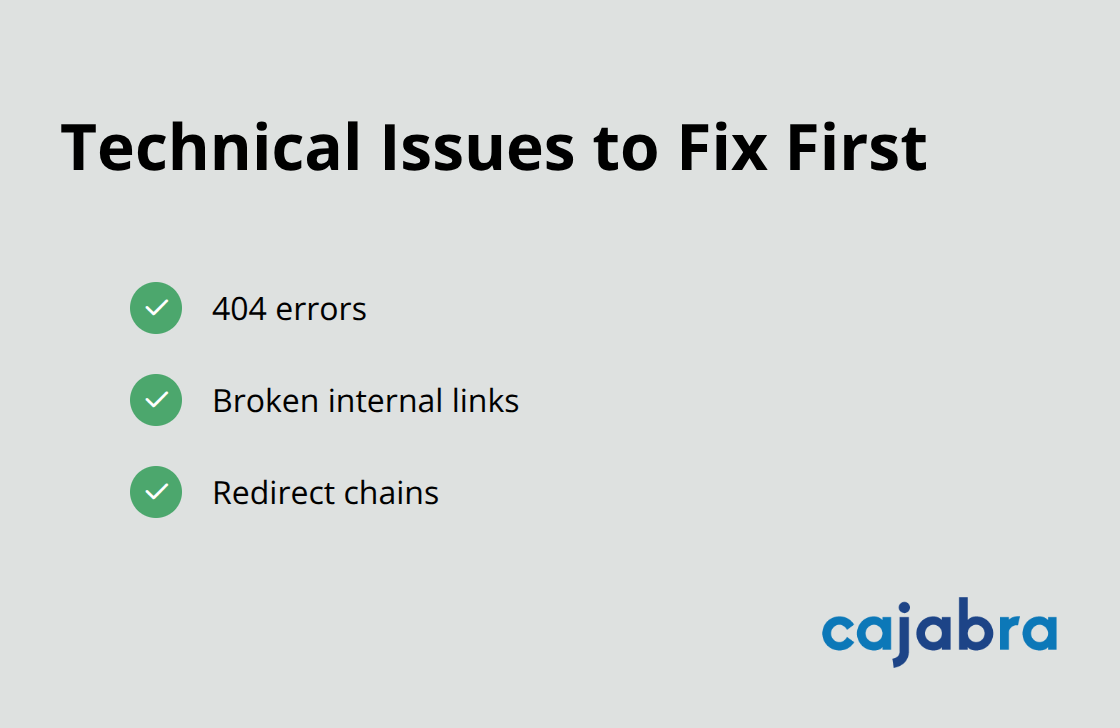
A single audit run often uncovers dozens of fixable issues that directly impact both rankings and user satisfaction. Fixing these problems typically takes less effort than creating new content but produces measurable improvements in search visibility.
Your audit reveals not just what you have, but what you're missing. When you compare your existing content against what your audience actually searches for, gaps become obvious. Tools like Google Trends, Answer the Public, and keyword research platforms show search volume for topics you haven't addressed. These gaps mean potential customers are searching for solutions you could provide but aren't currently visible for. Filling these gaps with high-quality, targeted content positions you to capture traffic and leads that currently go to competitors.
The next step moves beyond identifying problems to actually fixing them-which requires a clear action plan and the right tools to execute it efficiently.
Building a complete inventory of your content is the only way to know what you're working with. Start by exporting your sitemap or using a content inventory tool like Screaming Frog to pull every URL from your website automatically. If your site has under 500 URLs, Screaming Frog's free version works perfectly. For larger sites, SEMrush or Ahrefs crawl your entire domain and export the data into spreadsheets you can analyze. Each row should include the URL, page title, publication date, last updated date, content type (blog post, landing page, product page), primary keyword, word count, and current owner. This inventory becomes your working document throughout the audit. Without it, you make decisions based on guesses rather than facts.
Once you have the complete list, pull performance data from Google Analytics and Google Search Console for the past 12 months. Focus on metrics that actually matter: organic traffic, bounce rate, time on page, conversions, and rankings for target keywords. Pages with high traffic but high bounce rates signal that content isn't delivering what visitors expect.
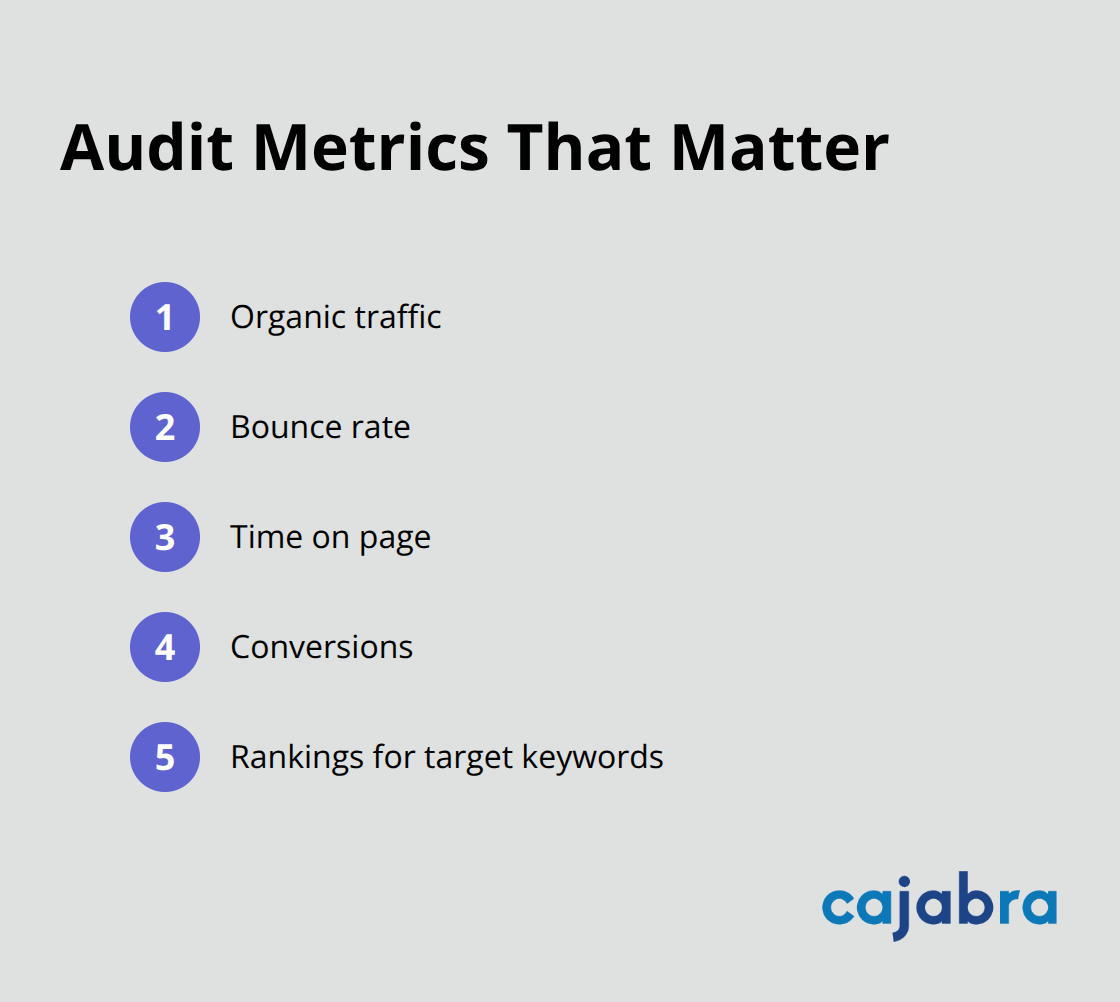
Pages with low traffic across months indicate either poor rankings or weak relevance to your audience. Sort your spreadsheet by traffic volume to identify your top 20 performers immediately, then flag any pages that receive fewer than 50 organic visits monthly as potential candidates for consolidation or removal.
Keyword research tools show exactly what your audience searches for that you haven't covered yet. Google Trends, Answer the Public, and SEMrush all reveal search volume and trending topics within your industry. Compare these searches against your existing content inventory to spot gaps. If 500 people monthly search for a topic you haven't published about, that's a clear gap worth filling. Simultaneously, identify pages that target overlapping keywords and decide which one should rank. If you have three blog posts about accounting software for small businesses, Google won't rank all three. Choose the strongest performer, consolidate the others into it, and redirect the weak pages to the winner. This consolidation approach prevents keyword cannibalization and concentrates your authority on a single, authoritative page.
Use Ahrefs or SEMrush to check which pages link to each of your overlapping articles, then update those internal links to point to your consolidated version. This simple step often produces ranking improvements within 4 to 8 weeks because you concentrate link equity and remove confusion for search engines about which page should rank. The technical work takes minimal effort compared to creating new content, yet the results prove measurable and fast.
For each piece of content, make a clear decision: keep it as-is, update it substantially, consolidate it with another page, or delete it entirely. Pages that receive consistent organic traffic and align with your business goals deserve to stay. Pages with outdated publication dates but strong rankings need refreshing with current statistics and examples. Pages that duplicate other content should be consolidated into the stronger version with a 301 redirect. Pages with virtually no traffic and no strategic value should be removed. Document these decisions directly in your spreadsheet with a status column. Assign a specific owner and a deadline for each action. Without clear ownership and timelines, updates stall indefinitely. For pages you're updating, prioritize high-traffic pages and those with conversion potential first. Refreshing an article that already receives 500 organic visits monthly delivers faster ROI than creating an entirely new page from scratch. Try to complete updates on 10 to 15 priority pages monthly for small teams, while larger organizations can handle 25 to 50 pages monthly depending on resource availability. Track progress in your spreadsheet and celebrate wins when updated pages recover rankings or traffic.
With your inventory complete and decisions documented, the next phase focuses on executing these changes efficiently and measuring the impact they produce.
Every content audit exposes the same three problems that most websites ignore until they damage search rankings and user trust.
The first problem appears as pages that receive traffic but fail to convert or engage. Pages with 300 monthly organic visits but high bounce rates signal that content is optimized for looking impressive rather than clearly driving one specific action. This happens when content promises something in the search result but delivers something different on the page, or when the information is outdated and no longer relevant. Google Search Console shows which pages rank for keywords but receive low click-through rates, signaling that your title tag or meta description doesn't match what visitors actually want. These pages waste your ranking authority on low-value traffic instead of driving leads or sales.
The second problem compounds the first: duplicate or overlapping content fragments your authority across multiple pages when Google could rank a single authoritative piece. This results in lower conversion rates, diminished authority, and lower CTRs for each page than for a consolidated page. When you have five pages about accounting software pricing, Google ranks whichever one it thinks is most authoritative that day, which means your link equity spreads thin across five weak pages instead of concentrating on one strong page.
The third problem is harder to spot but damages trust more than any algorithm penalty. Inconsistent messaging across your site confuses both visitors and search engines about what your business actually does. One landing page describes your service as cloud-based accounting solutions while another calls it automated bookkeeping software. Your homepage emphasizes speed while a product page emphasizes affordability.
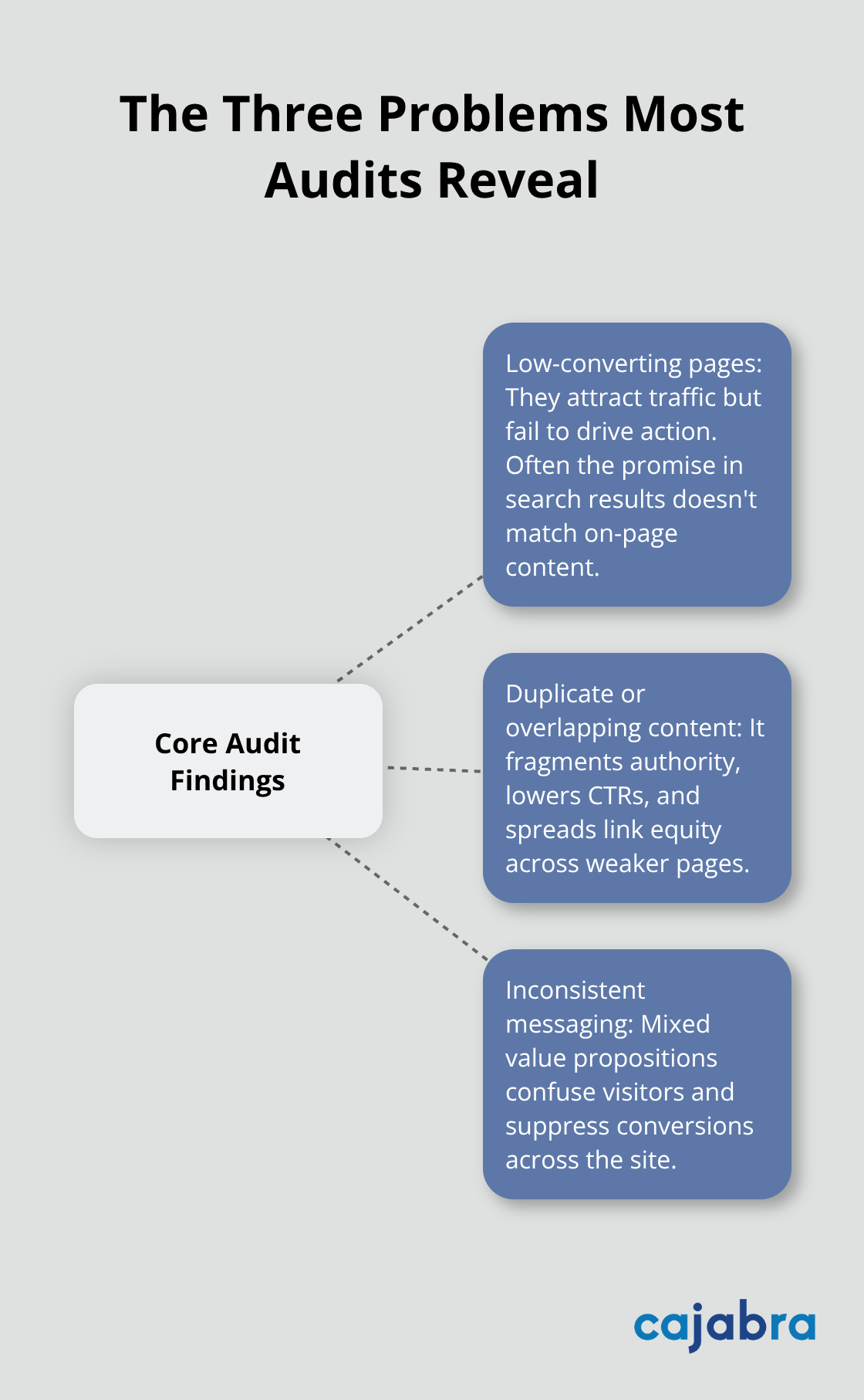
This inconsistency signals to potential customers that you lack a clear positioning, which kills conversion rates even when traffic arrives at your door.
Fixing these three problems produces faster results than creating new content because you recover value from pages that already rank and receive visitors. Pages that rank but don't convert often need only a rewrite of the body copy, clearer calls-to-action, or updated pricing information to transform them into lead generators. Consolidating overlapping pages takes a single afternoon of work but can recover significant search visibility because you concentrate link equity and remove confusion for search engines. Standardizing messaging across your site costs nothing except attention to detail during your audit phase, yet it produces measurable improvements in conversion rates because visitors encounter consistent positioning at every touchpoint.
Pages that already receive traffic represent proven demand for your content. Pages with ranking potential but low conversions represent untapped revenue sitting in plain sight. Pages that confuse visitors with inconsistent messaging represent leads you actively lose. These aren't theoretical problems-they're concrete opportunities to extract more value from content you've already published.
A content audit transforms how you think about the pages you've already published. Instead of constantly chasing new content, you recover value from existing pages that rank but don't convert, consolidate overlapping pieces that fragment your authority, and fix messaging inconsistencies that kill conversions. The three problems every audit reveals-low-converting pages, duplicate content, and inconsistent positioning-represent concrete revenue opportunities sitting in your analytics right now.
Start your audit by building a complete inventory of your content using Screaming Frog or SEMrush, then pull 12 months of performance data from Google Analytics and Google Search Console. Identify your top 20 performers and flag pages receiving fewer than 50 organic visits monthly as candidates for consolidation or removal. Compare your existing content against what your audience actually searches for using Google Trends or Answer the Public to spot gaps.
Most teams see measurable ranking improvements within 4 to 8 weeks after consolidating overlapping content and fixing technical issues. Pages you refresh with current data and examples often recover traffic faster than new pages gain traction. Cajabra specializes in marketing strategies for accounting firms that move you from overlooked to overbooked, and your content audit reveals what's broken so the next step fixes it strategically.